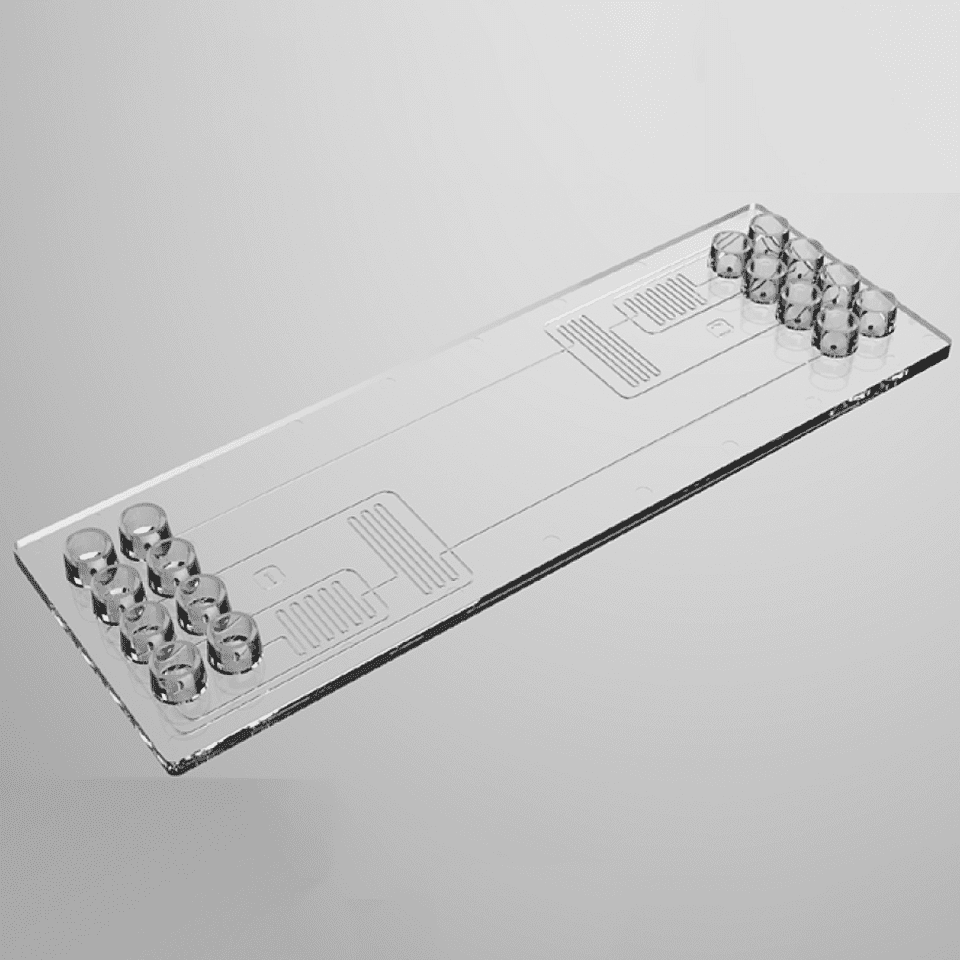

Material choice has a direct impact on the reliability and performance of microfluidic systems. Chips, connectors, and housings must handle fluids precisely while maintaining dimensional stability, chemical compatibility, and durability over time. Among the many plastics used in fluid-handling environments, Polystyrene (PS) and Polycarbonate (PC) are two materials commonly used for clear microfluidic components and rigid parts.
Both materials are easy to process and offer good optical clarity, but they behave differently under mechanical stress and temperature changes. Polycarbonate is known for its high impact resistance and strength, while polystyrene is more rigid but also more brittle. These differences directly affect how each material performs in microfluidic devices where precision, structural stability, and handling resistance are critical.
Understanding how these two plastics compare helps select the right material for specific microfluidic components.This article explores the unique properties and differences between PS and PC, helping you choose the right material for your microfluidic and industrial applications.
PS vs PC: Quick Comparison Table
The table below highlights the key properties of PS and PC, providing a side-by-side comparison of chemical resistance, mechanical characteristics, and other factors relevant to microfluidic and industrial applications.
| Property | PS | PC | Preferred Material |
|---|---|---|---|
| Chemical Resistance | Moderate | Moderate | - |
| Coefficient of Friction | 0.5 | 0.4 | PC |
| Coefficient of Thermal Expansion (between 21 and 100°C) | 8 × 10⁻⁵ /K | 6.6 × 10⁻⁵ /K | PC |
| Compressive Strength | 83 MPa | 86.2 MPa | PC |
| Cost | Relatively inexpensive | Relatively expensive | PS |
| Density | 1.05 g/cm³ | 1.2 g/cm³ | - |
| Dielectric Strength | 21 kV/mm | 15 kV/mm | PS |
| Elongation | 55% | 80% | PC |
| Flexural Modulus | 3.3 GPa | 2.38 GPa | PS |
| Hardness (Rockwell M) | ~70 | ~70 | - |
| Service Temperature (Continuous) | 10°C to 80°C | -20°C to 120°C | PC |
| Tensile Strength | 45 MPa | 65.5 MPa | PC |
| Thermal Conductivity | ~0.11 W/m·K | ~0.2 W/m·K | PC (slightly better heat transfer) |
| Water Absorption | 0.05% | 0.12% | PS |
💡 Note: The values presented in this table are for reference purposes only. Actual properties may vary depending on the supplier, as factors such as size, grade, and brand can influence performance. Both PS and PC are often available with customized specifications to meet specific application requirements.
PS vs PC: Material Overview
To better understand how polystyrene (PS) and polycarbonate (PC) perform in microfluidics and other applications, it is useful to look at their main characteristics, material behavior, and typical uses.
About PS
Polystyrene is a rigid thermoplastic widely used for lightweight molded parts and disposable products. It is easy to process, offers good optical clarity, and can be molded into precise shapes, which makes it attractive for high-volume manufacturing. Polystyrene is commonly used in packaging, laboratory consumables, food containers, and insulation materials. In microfluidics and laboratory environments, PS is often used for disposable components, microfluidic chips, culture plates, and diagnostic devices produced in large volumes at low cost.
About PC
Polycarbonate is a clear, tough thermoplastic that handles mechanical stress much better than brittle plastics, making it ideal for parts that face handling, pressure, or repeated use. It also performs well across a broad temperature range and maintains its shape and dimensions even when exposed to heat. PC also provides reliable electrical insulation. Its combination of transparency and durability makes it common in optical elements, protective covers, electronic enclosures, and medical devices. In microfluidic systems, PC is often used for chips, housings, and structural parts where clarity, strength, and long-term performance matter.
Side-by-Side Comparison
To understand how PS and PC perform in microfluidics and other demanding applications, it is helpful to examine their mechanical, chemical, thermal, and cost characteristics side by side.
Mechanical Properties
Polystyrene (PS) is rigid and moderately strong, but more brittle than PC. It works well for lightweight, disposable parts like culture plates or single-use microfluidic chips, where structural demands are lower and mechanical stress is minimal.
Polycarbonate (PC) is strong and impact-resistant. It withstands repeated handling, bending, and stress without cracking, making it suitable for durable microfluidic housings and connectors. It is the better choice when toughness and repeated use are important.
Chemical & Thermal Resistance
PS performs adequately with mild acids and bases but is vulnerable to organic solvents like acetone. Its lower temperature tolerance limits its use in heated processes or autoclaving.
PC handles a wider temperature range, from roughly -20°C to 120°C, and retains its mechanical properties under heat. It is therefore preferred for applications that involve higher temperatures. It also resists many common chemicals, although strong alkalis and hydrocarbons can affect it.
Cost Considerations
PS is cheaper and easier to process, which makes it attractive for disposable devices or high-volume manufacturing where cost per part is a concern.
PC comes at a higher price due to its superior strength, heat resistance, and impact performance. It’s a long-term investment for components that need durability and transparency.
Typical Applications
PS is commonly used for disposable microfluidic devices, petri dishes, packaging, and insulation panels, making it ideal for single-use, low-stress applications where keeping costs low is important.
PC is chosen for microfluidic chips, structural housings, protective covers, optical elements, and durable lab equipment, excelling in situations where transparency, impact resistance, and repeated use are required.
How to Choose Between PS and PC?
Choosing between PS and PC depends less on which material performs “better” in general, and more on which best fits the functional and environmental requirements of your application. Below are common scenario-based recommendations to help guide your selection.
1. If high impact resistance and mechanical durability are required:
PC performs significantly better due to its toughness and ability to absorb mechanical stress without cracking. It is more suitable for microfluidic housings, connectors, and structural components that must withstand repeated handling.
2. If operating conditions involve higher temperatures:
PC is the better option because it maintains its mechanical properties across a wider temperature range, while PS is limited to lower operating temperatures.
3. If cost is a deciding factor:
PS is typically the more economical material, making it attractive for cost-sensitive applications and large-scale manufacturing.
4. If optical clarity is required for observation or detection:
Both materials offer good transparency, but PC maintains its strength while remaining clear, making it better suited for durable optical components.
5. If chemical resistance is important:
PS resists diluted acids, some bases, and alcohols but is attacked by strong solvents like acetone or aromatic hydrocarbons. Polycarbonate (PC) handles diluted acids, alcohols, and aliphatic hydrocarbons but is sensitive to strong alkalis, halogenated, and aromatic solvents. Choosing between them depends on which chemicals your system will encounter.
👉 In short:
- Choose PS when you need a lightweight, inexpensive material for disposable or high-volume microfluidic components.
- Choose PC when durability, impact resistance, and higher temperature performance are required.
PS vs PC: Frequently Asked Questions
A closer look at common questions helps clarify which material is best suited for specific microfluidic and industrial applications.
Q1: Which material is stronger, PS or PC?
Polycarbonate is stronger and far more impact-resistant than polystyrene. PS is rigid but brittle, while PC can absorb mechanical stress, bending, and repeated handling without cracking.
Q2: Which material tolerates higher temperatures, PS or PC?
PC withstands higher temperatures (-20°C to 120°C) compared to PS (10°C to 80°C). It maintains strength and dimensional stability under heat, while PS softens more quickly.
Q3: Which material is more cost-effective, PS or PC?
PS is generally cheaper and easier to process. PC’s higher cost reflects its superior toughness, thermal stability, and long-term durability.
Q4: How do PS and PC compare in chemical resistance?
Both plastics handle mild acids and alcohols, but PS is vulnerable to strong solvents like acetone, while PC is sensitive to strong alkalis, aromatic, and halogenated compounds. Your choice should depend on the chemicals in your system.
Q5: Is Polycarbonate more flexible and impact-resistant than Polystyrene?
Yes, PC has higher impact resistance and toughness, making it suitable for components exposed to stress or repeated use. PS is more brittle and suitable only for low-stress or single-use parts.
Q6: When should I choose Polystyrene over Polycarbonate?
Choose PS for disposable, low-stress applications where cost matters more than toughness or thermal stability. It is ideal for single-use microfluidic devices, culture plates, or packaging.
Q7: When should I choose Polycarbonate over Polystyrene?
Pick PC for components requiring transparency, mechanical durability, or repeated use. It handles impact, bending, and moderate heat far better than PS, making it suitable for long-lasting microfluidic chips, housings, and protective covers.
💡 Conclusion
Polystyrene and polycarbonate are two widely used thermoplastics in microfluidics and broader industrial applications. PS is lightweight, rigid, and cost-effective, making it ideal for disposable, low-stress components. PC offers superior impact resistance, thermal stability, and long-term durability, making it the better choice for reusable or high-stress parts. Understanding their strengths and limitations helps you select the right material for your application, ensuring reliable performance, clarity, and durability.
Stay tuned for more deep dives into material choices for microfluidics, comparing tubing, connectors, and other component materials to help you make the best selection 🔬!
📧 If you have any questions or feedback, please feel free to contact us at contact@darwin-microfluidics.com.

🔗 References
- ScienceDirect. Polystyrene — Chemical Engineering Overview.
https://www.sciencedirect.com/topics/chemical-engineering/polystyrene - iPolymer. Polycarbonate (PC) Technical Datasheet.
https://www.ipolymer.com/pdf/Polycarbonate.pdf - Direct Plastics. Polycarbonate Data Sheet.
https://www.directplastics.co.uk/pdf/datasheets/polycarbonate-sheet-data-sheet.pdf - Xometry. Polystyrene (PS) Overview.
https://www.xometry.com/resources/materials/polystyrene/