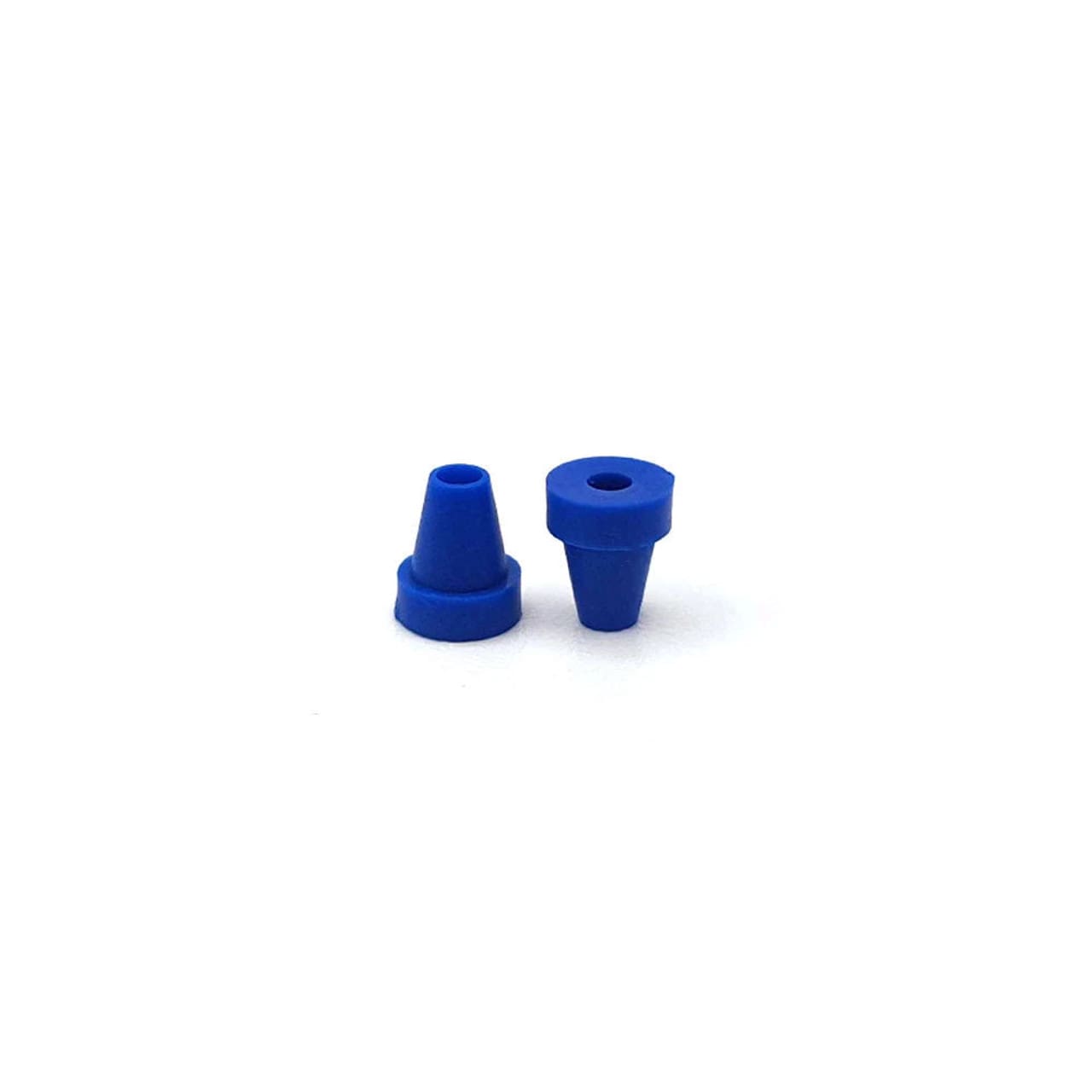

Choosing the right material is a big part of designing reliable microfluidic systems. Tubing, fittings, and small precision parts all need to handle chemicals, temperature changes, and constant fluid contact without degrading. Two materials frequently used in microfluidic components are ETFE (Ethylene-TetraFluoroEthylene) and FEP (Fluorinated Ethylene Propylene), fluoropolymers valued for their stability and broad chemical compatibility.
While both materials share the inherent benefits of fluoropolymers—such as low surface energy, high purity, and strong electrical insulation—they differ in mechanical strength, processability, and long-term durability. These differences matter in microfluidics, where materials must withstand aggressive solvents and tight dimensional tolerances.
Beyond microfluidics, ETFE and FEP are also used in aerospace wiring, chemical processing equipment, electronics, and advanced architectural or solar applications, thanks to their robustness and long service life. This article highlights the key differences between ETFE and FEP and provides clear, practical guidance to help you choose the right material for your microfluidic and industrial applications.
ETFE vs FEP: Quick Comparison Table
The table below highlights the key properties of ETFE and FEP, providing a side-by-side comparison of chemical resistance, mechanical characteristics, and other factors relevant to microfluidic and industrial applications.
| Property | ETFE | FEP | Preferred Material |
|---|---|---|---|
| Chemical Resistance | Excellent | Excellent | Both |
| Coefficient of Friction | 0.3 | 0.25 | ETFE |
| Coefficient of Thermal Expansion (between 21 and 100°C) | 12.6 × 10⁻⁵ /K | 13.5 × 10⁻⁵ /K | ETFE |
| Compressive Strength | 38 MPa | 15 MPa | ETFE |
| Cost | Less expensive | More expensive | ETFE |
| Density | 1.7 g/cm³ | 2.1 g/cm³ | - |
| Dielectric Strength | 70 kV/mm | 80 kV/mm | FEP |
| Elongation | 200 | 300 | FEP |
| Flexural Modulus | 1 GPa | 0.66 GPa | ETFE |
| Hardness (Shore D) | 68 | 55 | ETFE |
| Service Temperature (Continuous) | -100°C to 155°C | -150°C to 200°C | FEP |
| Tensile Strength | 40 MPa | 23 MPa | ETFE |
| Thermal Conductivity | ~0.24 W/m·K | ~0.21 W/m·K | ETFE |
| Water Absorption | 0.007% | 0.004% | FEP |
💡 Note: The values presented in this table are for reference purposes only. Actual properties may vary depending on the supplier, as factors such as size, grade, and brand can influence performance. Both ETFE and FEP are often available with customized specifications to meet specific application requirements.
ETFE vs FEP: Material Overview
To better understand how ETFE and FEP perform in microfluidics and other domains, it is useful to examine their key properties, characteristics, and typical use cases.
About ETFE
ETFE (Ethylene Tetrafluoroethylene) is a partially fluorinated copolymer known for its toughness, abrasion resistance, and mechanical strength. It handles repeated stress well, making it ideal for components like connectors, and membranes that may experience impact or stretching. ETFE is also UV- and radiation-resistant, which allows for reliable performance in outdoor or high-radiation environments. Its temperature range and chemical resistance make it suitable for most microfluidic applications, though extreme heat or highly aggressive chemicals may push it beyond its limits.
About FEP
FEP (Fluorinated Ethylene Propylene) is a fully fluorinated polymer with excellent chemical resistance and a wide operating temperature range. It is softer and more flexible than ETFE, which makes it ideal for tubing, hoses, and coated components requiring transparency, tight bends, or precise molding. Its low friction and minimal water absorption make it particularly useful for fluid-handling systems where smooth flow and dimensional stability are critical.
Side-by-Side Comparison
Although ETFE and FEP belong to the same fluoropolymer family, their behavior differs when examined across mechanical performance, chemical and thermal resistance, cost, and typical applications.
Mechanical Properties
ETFE stands out for its higher mechanical strength and stiffness. It offers greater tensile and compressive strength, higher hardness, and better resistance to abrasion and impact. This makes ETFE well suited for microfluidic components that must withstand mechanical stress or repeated assembly.
FEP, in contrast, is softer and more flexible. Its higher elongation allows it to bend easily without cracking. However, its lower mechanical strength makes it less suitable than ETFE for load-bearing or high-stress components.
Chemical & Thermal Resistance
Both ETFE and FEP exhibit excellent chemical resistance and low water absorption, making them reliable choices for handling aggressive fluids in microfluidic systems.
FEP has the advantage in temperature performance, with a wider continuous service range and better stability at elevated temperatures. This makes it more suitable for applications involving heat, thermal cycling, or sterilization processes.
ETFE performs well across a broad temperature range but is generally limited to lower maximum operating temperatures. Its chemical resistance remains strong, though slightly below that of fully fluorinated polymers like FEP.
Cost and Implementation
ETFE is generally more cost-effective than FEP, making it an attractive option for applications that require fluoropolymer performance without the higher material cost. FEP’s higher price reflects its enhanced temperature resistance, flexibility, and processing advantages.
Typical Applications
ETFE is commonly used for mechanically demanding microfluidic components, wire insulation, and applications exposed to UV or outdoor environments.
FEP is preferred for microfluidic tubing, and systems exposed to higher temperatures or requiring frequent sterilization.
How to Choose Between ETFE and FEP?
Choosing between ETFE and FEP is less about finding a “better” material and more about matching the material to how the microfluidic system will be used. The following scenarios highlight where each material makes the most sense.
1. If mechanical strength and durability are critical:
ETFE is the better choice. Its higher tensile and compressive strength, greater stiffness, and better abrasion resistance make it well suited for microfluidic fittings, connectors, and components that experience mechanical stress, handling, or repeated assembly.
2. If flexibility is required:
FEP is preferred. Its higher elongation and lower stiffness allow it to bend more easily without kinking, making it a better option for tubing, compact layouts, or applications where transparency and smooth routing are important.
3. If operating temperatures are elevated:
FEP performs better in high-temperature environments. Its wider continuous service temperature range makes it more reliable for applications involving heat exposure, thermal cycling, or sterilization processes commonly found in laboratory and industrial microfluidics.
4. If cost is a deciding factor:
ETFE is generally the more economical option. It provides strong mechanical performance and good chemical resistance at a lower cost, making it attractive for cost-sensitive projects.
5. If chemical exposure and fluid purity are key points:
Both materials perform very well, but FEP has a slight advantage in extreme chemical environments and high-purity fluid handling. ETFE remains an excellent option for most chemical applications where slightly lower temperature limits are acceptable.
👉 In short:
- Choose ETFE for mechanically robust, cost-effective microfluidic components exposed to moderate temperatures.
- Choose FEP for flexible, transparent tubing and systems operating at higher temperatures or requiring excellent chemical stability.
ETFE vs FEP: Frequently Asked Questions
A closer look at common questions helps clarify which material is best suited for specific microfluidic and industrial applications.
Q1: Which material has better mechanical strength, ETFE or FEP?
ETFE offers higher tensile and compressive strength, making it the better option for components that must withstand mechanical stress, impacts, or repeated handling.
Q2: How do ETFE and FEP compare in chemical resistance?
Both are excellent against most chemicals, but FEP slightly edges out ETFE for aggressive solvents and high-purity fluid handling applications.
Q3: Which material is more flexible, ETFE or FEP?
FEP’s higher elongation and lower stiffness make it the preferred choice for tubing or applications requiring bending and tight routing.
Q4: Which material tolerates higher temperatures, ETFE or FEP?
FEP handles a wider continuous temperature range (-150°C to 200°C) compared to ETFE (-100°C to 155°C), making it more suitable for high-temperature microfluidic processes or sterilization.
Q5: Which material is more cost-effective, ETFE or FEP?
ETFE is generally less expensive and offers strong mechanical performance and good chemical resistance. FEP is pricier but provides superior flexibility, high-temperature tolerance, and slightly better chemical inertness.
Q6: When should I choose ETFE over FEP?
Choose ETFE when toughness and mechanical strength matter. It handles abrasion, impacts, and UV/radiation far better than FEP, making it ideal for components exposed to outdoor conditions or heavy physical stress. Its durability ensures long-term performance in microfluidic parts or industrial applications. If your priority is strength, resistance to wear, and long-lasting stability—ETFE is the way to go.
Q7: When should I choose FEP over ETFE?
Pick FEP when chemical resistance is critical, especially against strong acids, bases, or solvents. Its flexibility and melt-processability let you mold or extrude it into precise shapes, which ETFE can’t do as easily. FEP’s transparency makes it perfect for applications where you need to see fluid flow, and its low friction helps reduce wear in moving parts. If your project requires clear, flexible, and chemically tough components—FEP is the better choice.
💡 Conclusion
ETFE and FEP are two widely used fluoropolymers in microfluidics and industrial applications. Knowing their strengths and differences—mechanical toughness and UV durability for ETFE, chemical resistance and flexibility for FEP—helps you select the right material for your components, ensuring reliable performance and long-term durability.
Stay tuned for more deep dives into material choices for microfluidics, comparing tubing, connectors, and other component materials to help you make the best selection 🔬!
📧 If you have any questions or feedback, please feel free to contact us at contact@darwin-microfluidics.com.

🔗 References
- Curbell Plastics. ETFE Material Overview.
https://www.curbellplastics.com/materials/plastics/etfe/ - SAB Cables. ETFE, FEP, and PFA Technical Data.
https://sab-cables.com/donnees-techniques/etfe-fep-pfa/ - Insulation Tubings. Difference Between PTFE, FEP, PFA, and ETFE.
https://fr.insulation-tubings.com/info/difference-between-ptfe-fep-pfa-etfe-66488620.html - Greater Wire. Differences Between FEP, PFA, PTFE, and ETFE.
https://www.greaterwire.com/news/differences-between-fep-pfa-ptfe-and-etfe-i-85205012.html - PVDF Resin. Comparison of Properties: PTFE, PFA, FEP, ETFE.
http://fr.pvdfresin.com/news/comparison-of-properties-ptfe-pfa-fep-etfe-74345015.html - HT Cable Wire. PTFE, FEP, PFA, ETFE Comparison.
https://www.htcablewire.com/fr/blog/ptfe-fep-pfa-etfe-comparison-1