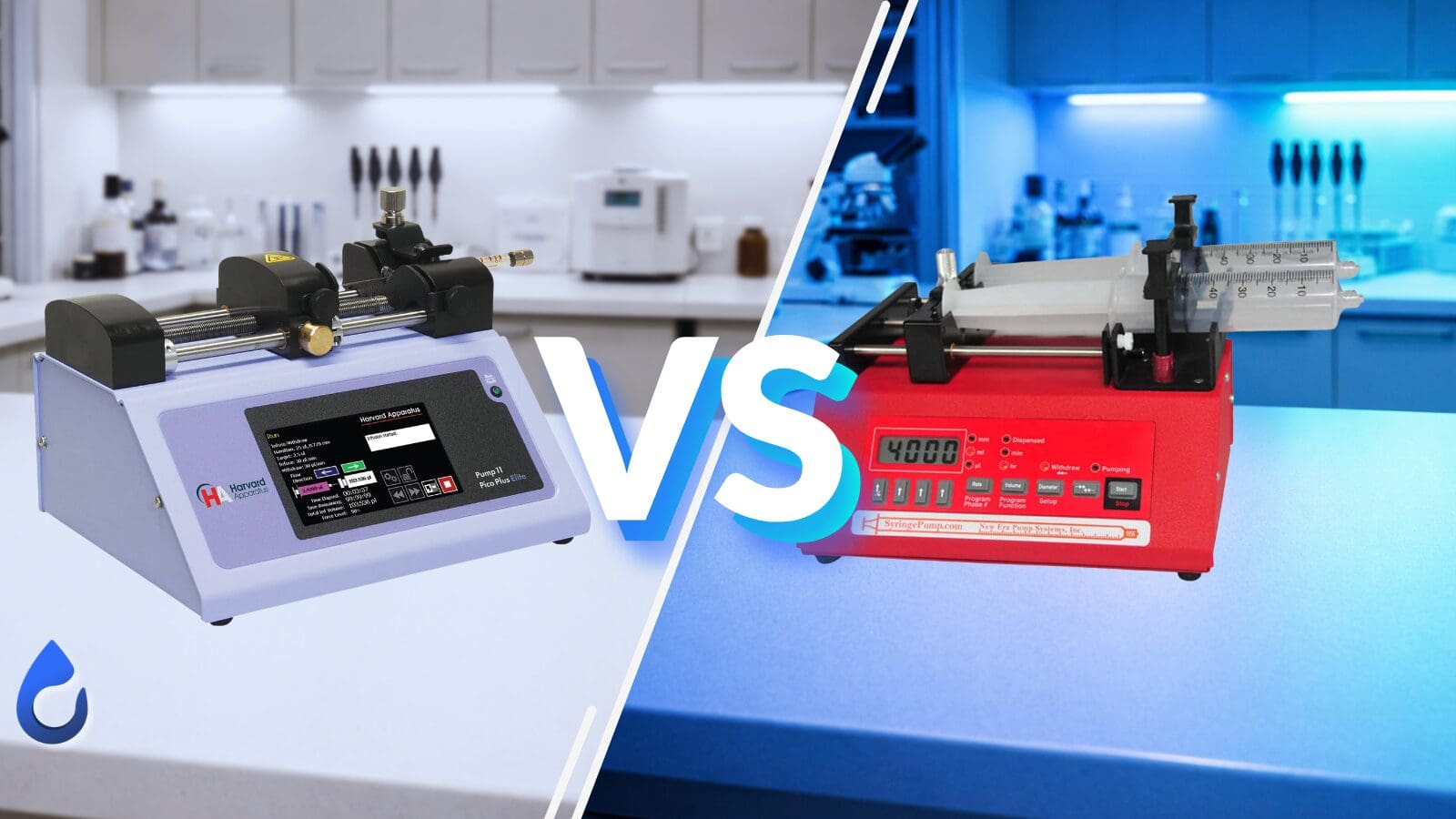
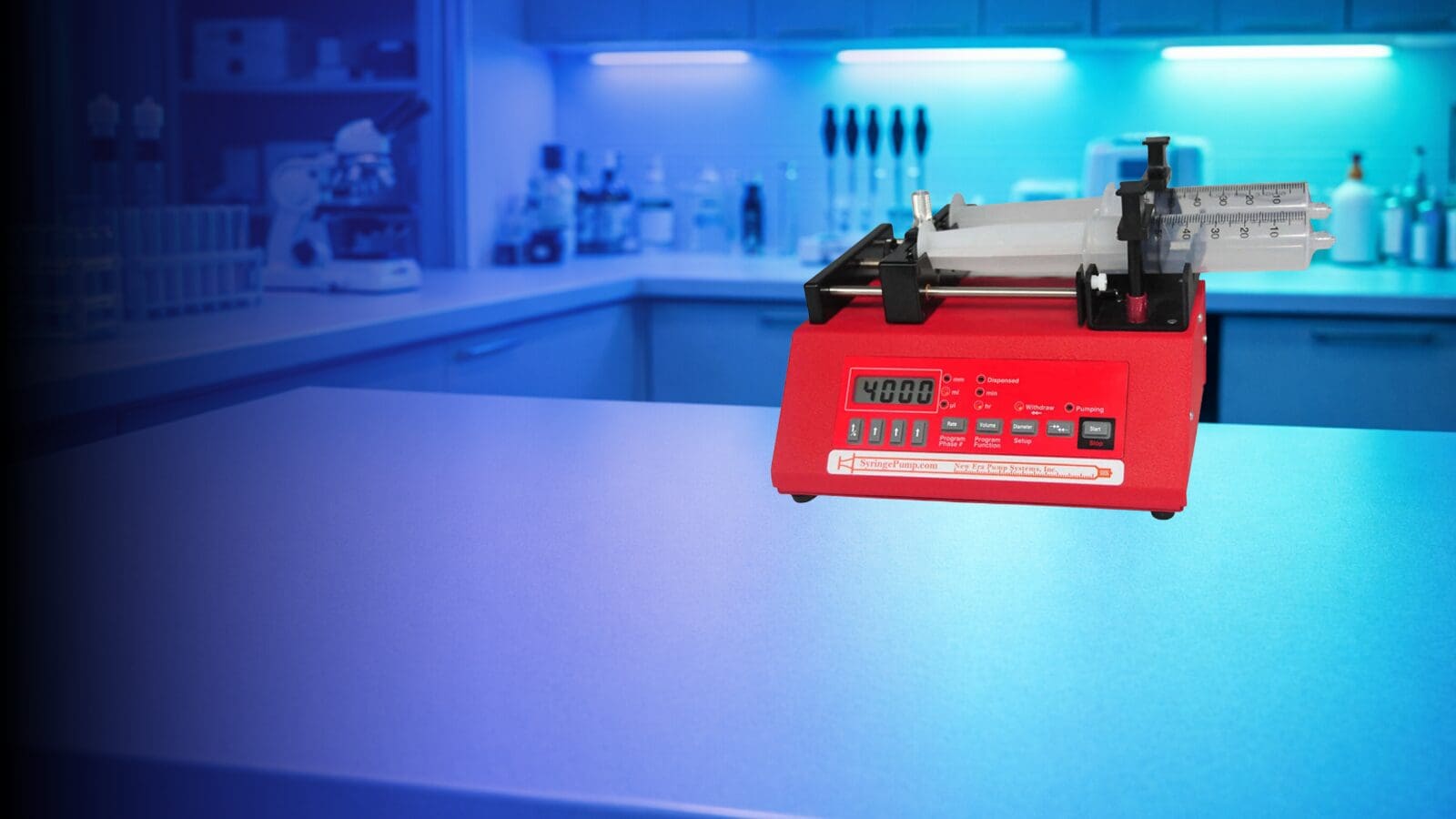
Harvard Apparatus 11 Pico Plus Elite Syringe Pump vs NE-4002X SyringeTWO:Microfluidics Programmable Syringe Pump: Quick Verdict
The Harvard Apparatus 11 Pico Plus Elite wins for laboratories demanding the highest accuracy and easiest standalone operation. With ±0.35% accuracy and ±0.05% reproducibility, it outperforms the NE-4002X in precision-critical applications. The intuitive touchscreen interface means researchers can program complex methods without connecting a computer.
The NE-4002X SyringeTWO:Microfluidics takes the crown for budget-conscious labs and high-volume automation setups. At roughly $2,564 compared to $4,300-$4,430 for the Harvard unit, it delivers exceptional value. Its 340 programmable phases (versus 50 steps on the Harvard) and ability to daisy-chain 100 pumps make it the stronger choice for complex automated workflows.
Choose the Harvard Apparatus pump if your experiments require ultra-precise picoliter flows and you value PC-free operation. Choose the NE-4002X if budget matters, you need larger syringe compatibility (up to 60 mL standard), or you’re building extensive multi-pump networks.
11 Pico Plus Elite vs NE-4002X SyringeTWO at a Glance
| Feature | Harvard Apparatus 11 Pico Plus Elite | NE-4002X SyringeTWO:Microfluidics |
|---|---|---|
| Price | $4,299.75 – $4,429.62 | $2,563.70 |
| Flow Range | 0.54 pL/min to 11.70 mL/min (dual) | 0.12 pL/min to 1226 mL/min |
| Accuracy | ±0.35% | ±0.5% |
| Reproducibility | ±0.05% | ±0.2% |
| Max Syringe Size | 10 mL (dual channel) | 60 mL (140 mL partial) |
| Interface | Color touchscreen | Keypad |
| Programmable Steps | 50 steps | 340 phases (with firmware upgrade) |
| Daisy-Chain Limit | 99 pumps (RS-485) | 100 pumps (RS-232) |
| Linear Force | 16 kg (35 lbs) | 68 kg (150 lbs) at min speed |
| Warranty | 2 years | 2 years |
The comparison reveals distinct design philosophies. Harvard Apparatus prioritized precision and user experience, building a pump that excels at ultra-low flow microfluidic work with minimal setup friction. New Era Pump Systems designed the NE-4002X for versatility and automation, accepting slightly lower accuracy in exchange for broader syringe compatibility and deeper programming capabilities.
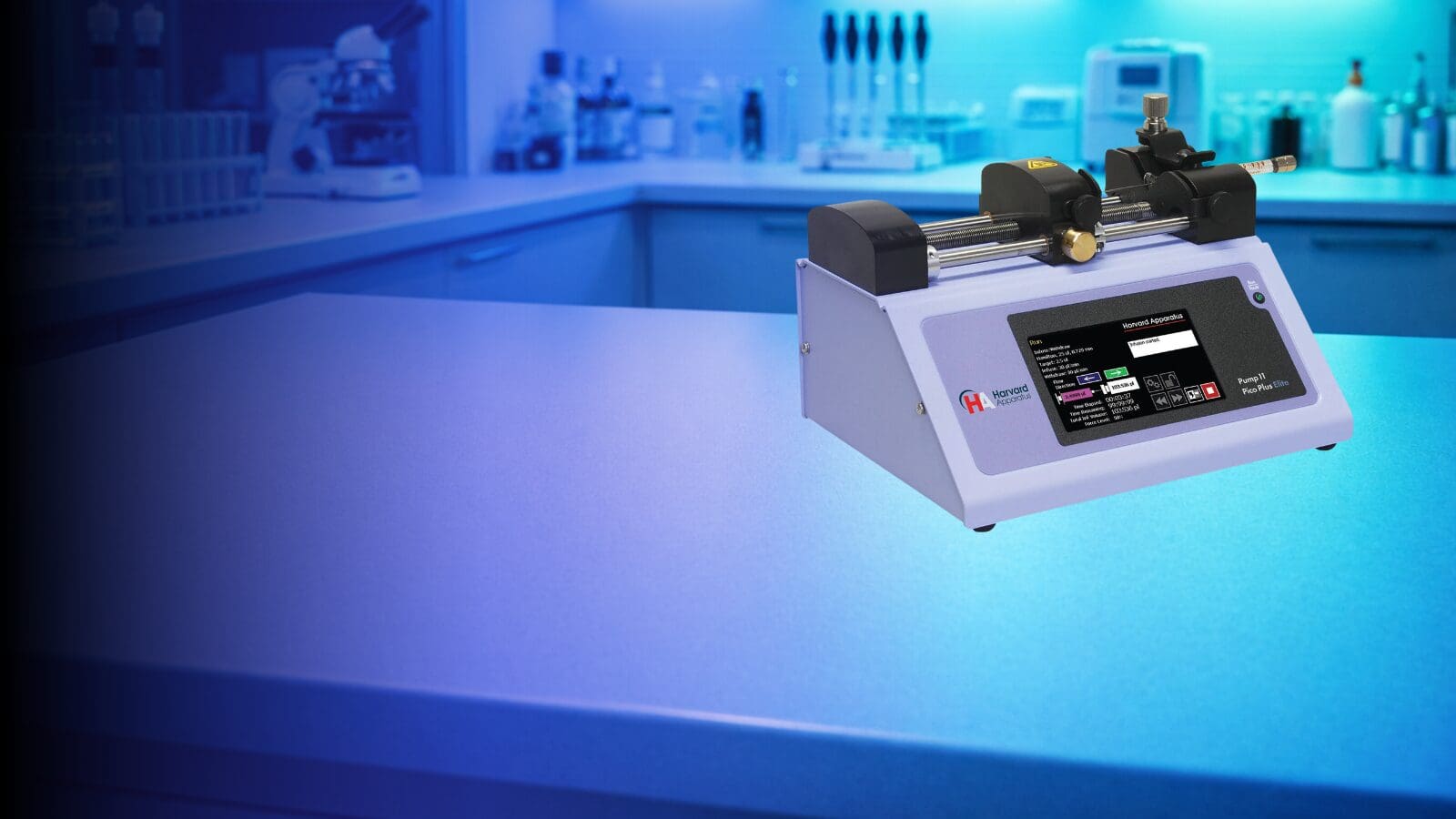
Description of the 11 Pico Plus Elite Syringe Pump
Harvard Apparatus, a division of Harvard Bioscience with over 100 years in life science instrumentation, manufactures the 11 Pico Plus Elite. This dual-channel programmable syringe pump targets microfluidic researchers who cannot compromise on flow precision.
The pump delivers flow rates from 0.54 pL/min to 11.70 mL/min in dual-syringe configuration. Its 0.9° stepper motor with 1/16 microstepping (20,480 microsteps per lead screw revolution) eliminates flow pulsation that can disrupt sensitive experiments. The dual syringe rack accommodates glass or plastic syringes from 0.5 µL to 10 mL.
What sets this pump apart is the 4.3" WQVGA color touchscreen. Researchers can create, save, and run complex multi-step methods without connecting a computer. Four pre-programmed profiles (constant rate, ramp, gradient, autofill) cover most common applications, while user-defined methods allow up to 50 steps with time delays, repeating sequences, and TTL triggers.
The pump supports both infusion and withdrawal operations. For cramped lab benches, it can operate vertically with a tilting display, reducing its footprint by 55%. Connectivity options include USB, RS-485 for daisy-chaining up to 99 pumps, footswitch input, and digital I/O.
Description of the NE-4002X SyringeTWO:Microfluidics
New Era Pump Systems produces the NE-4002X SyringeTWO:Microfluidics, positioning it as a high-value dual-channel pump for automation-focused laboratories. The company built this model specifically for microfluidic applications requiring smooth, programmable flow control.
Flow rates span 0.12 pL/min (with 0.5 µL syringes) to 1226 mL/min (with 60 mL syringes). The pump accepts syringes up to 60 mL standard, or 140 mL syringes filled to 120 mL. This broader syringe range makes it suitable for applications beyond traditional microfluidics.
The NE-4002X shines in automation capability. Users can program up to 340 phases with variable infusion/withdrawal rates, dispensing volumes, pauses, and external signal responses. The X Upgrade includes smooth linear gradient pumping: set your start rate, end rate, and duration, and the pump handles the transition automatically.
Linear force reaches 68 kg (150 lbs) at minimum speed, far exceeding the Harvard unit. This matters when pushing viscous fluids or working with high-resistance microfluidic chips. The RS-232 interface supports daisy-chaining up to 100 pumps from a single computer port, with both Basic and Safe communication modes for different reliability requirements.
The keypad interface lacks the Harvard’s touchscreen elegance but includes a lockout feature preventing unauthorized settings changes. Power failure recovery restores all parameters on restart.
Feature-by-Feature Comparison
Accuracy and Reproducibility
Accuracy determines how close your actual flow rate matches your target. The Harvard Apparatus 11 Pico Plus Elite achieves ±0.35% accuracy with ±0.05% reproducibility. The NE-4002X delivers ±0.5% accuracy with ±0.2% reproducibility.
For most microfluidic applications, both pumps perform adequately. The difference becomes significant in quantitative assays, drug delivery studies, or any experiment where small flow variations compound over time. A 0.15% accuracy gap might seem trivial, but over hours of continuous pumping, it affects total delivered volume.
Winner: Harvard Apparatus 11 Pico Plus Elite – The tighter specifications justify the premium for precision-critical work.
User Interface
The Harvard unit features a 4.3" color touchscreen with icon-based navigation. Creating methods, selecting syringes, and monitoring pump status happens through intuitive touch interactions. No computer required for daily operation.
The NE-4002X uses a traditional keypad interface. While functional, it requires more button presses and menu navigation to accomplish the same tasks. The optional audible beep confirms each keypress, and the lockout feature prevents accidental changes.
Winner: Harvard Apparatus 11 Pico Plus Elite – The touchscreen dramatically reduces setup time and training requirements.
Screenshot of the Picro Plus Elite interface
Programming Flexibility
Here the NE-4002X pulls ahead. Its 340 programmable phases dwarf the Harvard’s 50 steps. The Pumping Program Generator spreadsheet enables one-click program uploads. Pre-programmable dispensing protocols let operators select from stored methods without understanding programming details.
The Harvard pump offers four pre-built profiles plus user-defined methods. Methods can be duplicated, renamed, appended, and exported between pumps. Sufficient for most applications, but limiting for complex automated sequences.
Winner: NE-4002X SyringeTWO:Microfluidics – Seven times more programmable steps opens possibilities the Harvard cannot match.
Syringe Compatibility
The NE-4002X accepts syringes from 0.5 µL to 60 mL (or 140 mL partially filled), with inner diameters from 0.100 to 50.00 mm. This range covers everything from precision microfluidic syringes to large-volume dispensing applications.
The Harvard dual-channel model limits users to 10 mL maximum syringe size. Researchers needing larger volumes must look elsewhere or use the single-syringe version (which accepts up to 50/60 mL).
Winner: NE-4002X SyringeTWO:Microfluidics – Six times larger maximum syringe capacity provides greater experimental flexibility.
Linear Force
Force matters when pushing fluids through high-resistance systems. The NE-4002X generates 68 kg (150 lbs) at minimum speed and 8.2 kg (18 lbs) at maximum speed. The Harvard produces 16 kg (35 lbs) at 100% force.
For standard microfluidic chips with low back-pressure, both pumps work fine. When dealing with packed columns, long narrow tubing, or viscous fluids, the NE-4002X’s superior force prevents stalling.
Winner: NE-4002X SyringeTWO:Microfluidics – Over four times the maximum force handles demanding applications.
Connectivity and Networking
Both pumps support extensive networking. The Harvard uses RS-485 to daisy-chain up to 99 pumps, plus USB and optional RS-232. The NE-4002X networks up to 100 pumps via RS-232 with Basic or Safe communication protocols.
The Harvard’s USB port simplifies single-pump computer connections. The NE-4002X’s Safe mode includes 16-bit CRC error detection and automatic alarm packets for stall or reset conditions. For mission-critical automation, this reliability matters.
Winner: Tie – Both offer robust networking; choice depends on existing infrastructure. The Pico Plus Elite’s USB connection can be a plus in terms of user-friendliness
Pricing: Harvard Apparatus 11 Pico Plus Elite Syringe Pump vs NE-4002X SyringeTWO:Microfluidics Programmable Syringe Pump
The Harvard Apparatus 11 Pico Plus Elite dual-channel model costs $4,299.75 to $4,429.62. The NE-4002X SyringeTWO:Microfluidics sells for $2,563.70. That $1,736 to $1,866 difference represents a 40-42% premium for the Harvard unit.
Both pumps include a power supply and basic documentation. Neither requires ongoing software subscriptions or licensing fees. Both carry 2-year warranties.
For academic labs with tight equipment budgets, the NE-4002X delivers capable performance at accessible pricing. The savings could fund additional syringes, tubing, or microfluidic chips. Purchasing two NE-4002X units costs less than one Harvard pump while providing four channels.
Core facilities and pharmaceutical labs often prioritize accuracy over cost. The Harvard’s superior precision and touchscreen interface reduce training time and experimental variability. When a single failed experiment costs thousands in reagents and researcher time, the premium pays for itself.
Consider total cost of ownership. Both pumps require periodic maintenance: cleaning, tubing replacement, and occasional calibration verification. Neither manufacturer charges significantly more for consumables or service. The initial purchase price remains the primary cost differentiator.
The Verdict: 11 Pico Plus Elite or SyringeTWO: Microfluidics?
Choose the Harvard Apparatus 11 Pico Plus Elite if you:
- Require the highest accuracy (±0.35%) and reproducibility (±0.05%) for quantitative experiments
- Want standalone operation without computer dependency
- Value intuitive touchscreen programming that reduces training time
- Work primarily with syringes 10 mL or smaller
- Need regulatory certification breadth (CE, ETL, UL, CSA, RoHS, CB Scheme)
- Have budget flexibility and prioritize precision over cost
Choose the NE-4002X SyringeTWO:Microfluidics if you:
- Need to control costs without sacrificing core functionality
- Require larger syringe compatibility (up to 60 mL)
- Build complex automated sequences requiring 340+ programmable phases
- Work with viscous fluids or high-resistance systems requiring 68 kg force
- Plan extensive multi-pump networks with computer control
- Prefer one-click program uploads from spreadsheets

Frequently Asked Questions
Which pump offers better accuracy for microfluidic applications?
The Harvard Apparatus 11 Pico Plus Elite provides ±0.35% accuracy versus ±0.5% for the NE-4002X. For most microfluidic work, both perform adequately, but quantitative assays benefit from the Harvard’s tighter specifications.
Can both pumps operate without a computer?
Yes. The Harvard uses its touchscreen for complete standalone programming. The NE-4002X uses keypad entry for standalone operation, though computer programming offers more convenience for complex sequences.
What syringe sizes work with each pump?
The Harvard dual-channel accepts 0.5 µL to 10 mL syringes. The NE-4002X handles 0.5 µL to 60 mL (or 140 mL partially filled), offering significantly broader compatibility.
How many pumps can I network together?
The Harvard supports up to 99 pumps via RS-485. The NE-4002X connects up to 100 pumps via RS-232. Both support extensive automation setups.
Which pump handles viscous fluids better?
The NE-4002X generates 68 kg (150 lbs) force at minimum speed, compared to 16 kg (35 lbs) for the Harvard. For viscous fluids or high-resistance systems, the NE-4002X prevents stalling more effectively.
What warranty coverage do these pumps include?
Both pumps carry 2-year warranties from their respective manufacturers.