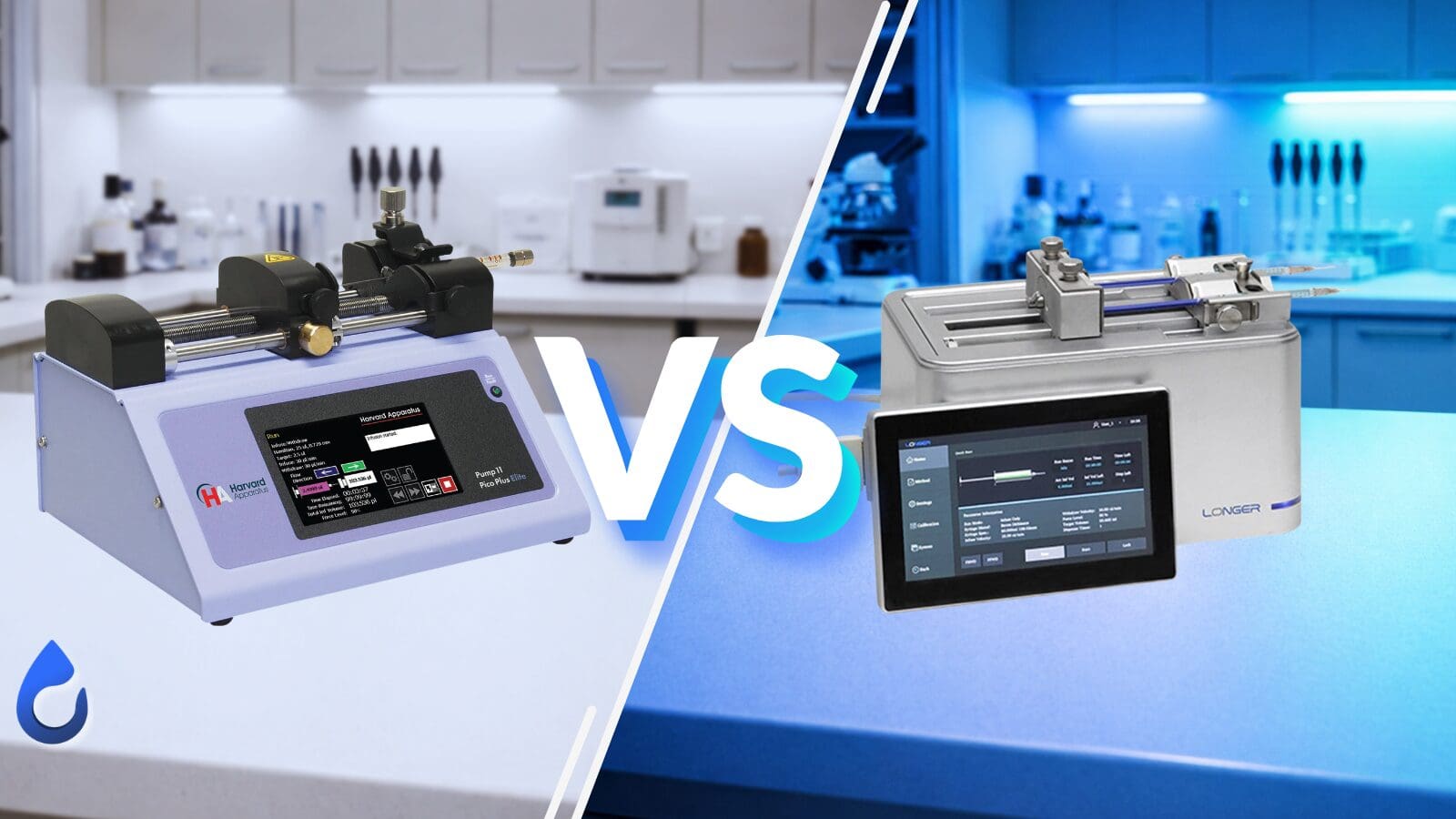
11 Pico Plus Elite vs dLSP 500 Digital Syringe Pump: Quick Verdict
The Harvard Apparatus 11 Pico Plus Elite wins for researchers who need the absolute lowest flow rates with proven accuracy from an established manufacturer. Its 0.54 pL/min minimum flow rate, combined with ±0.35% accuracy and ±0.05% reproducibility, makes it the clear choice for demanding microfluidic applications where picoliter precision matters.
The dLSP 500 Digital Syringe Pump takes the lead for labs prioritizing modern connectivity and regulatory compliance. With Wi-Fi, Bluetooth, Ethernet, and Android app control, plus 21CFR Part 11 compliance in the Pro version, it offers flexibility that the Harvard unit simply cannot match.
Choose the Harvard Apparatus if your work involves ultra-low flow microfluidics, you need to daisy-chain up to 99 pumps, or you value the 2-year warranty from a trusted name. Choose the dLSP 500 if you need wireless control, regulatory documentation for pharmaceutical work, or want a lower entry price point with the standard model.
Harvard Apparatus 11 Pico Plus Elite Syringe Pump vs dLSP 500 Digital Syringe Pump at a Glance
| Feature | Harvard Apparatus 11 Pico Plus Elite | dLSP 500 Digital Syringe Pump |
|---|---|---|
| Price Range | $4,299.75 – $4,429.62 | $3,409.73 – $5,014.27 |
| Accuracy | ±0.35% | ±0.5% (Standard) / ±0.35% (Pro) |
| Min Flow Rate | 0.54 pL/min | 0.3 pL/min (Pro) / 0.7 pL/min (Standard) |
| Max Flow Rate | 39.77 mL/min (single) / 11.70 mL/min (dual) | 120 mL/min (single) / 74.7 mL/min (dual) |
| Display | 4.3" TFT touchscreen | 7" IPS HD LCD |
| Connectivity | USB, RS-485, TTL I/O | USB, RS-485, Ethernet, Wi-Fi, Bluetooth |
| Regulatory | CE, ETL, RoHS | 21CFR Part 11 (Pro version) |
| Warranty | 2 years | Not specified |
| Best For | Ultra-precision microfluidics | Flexible connectivity, pharma compliance |
The comparison reveals two distinct design philosophies. Harvard Apparatus prioritizes proven precision and scalability for multi-pump setups. The dLSP 500 emphasizes modern connectivity options and regulatory compliance features that pharmaceutical labs increasingly require.
Description of the 11 Pico Plus Elite:
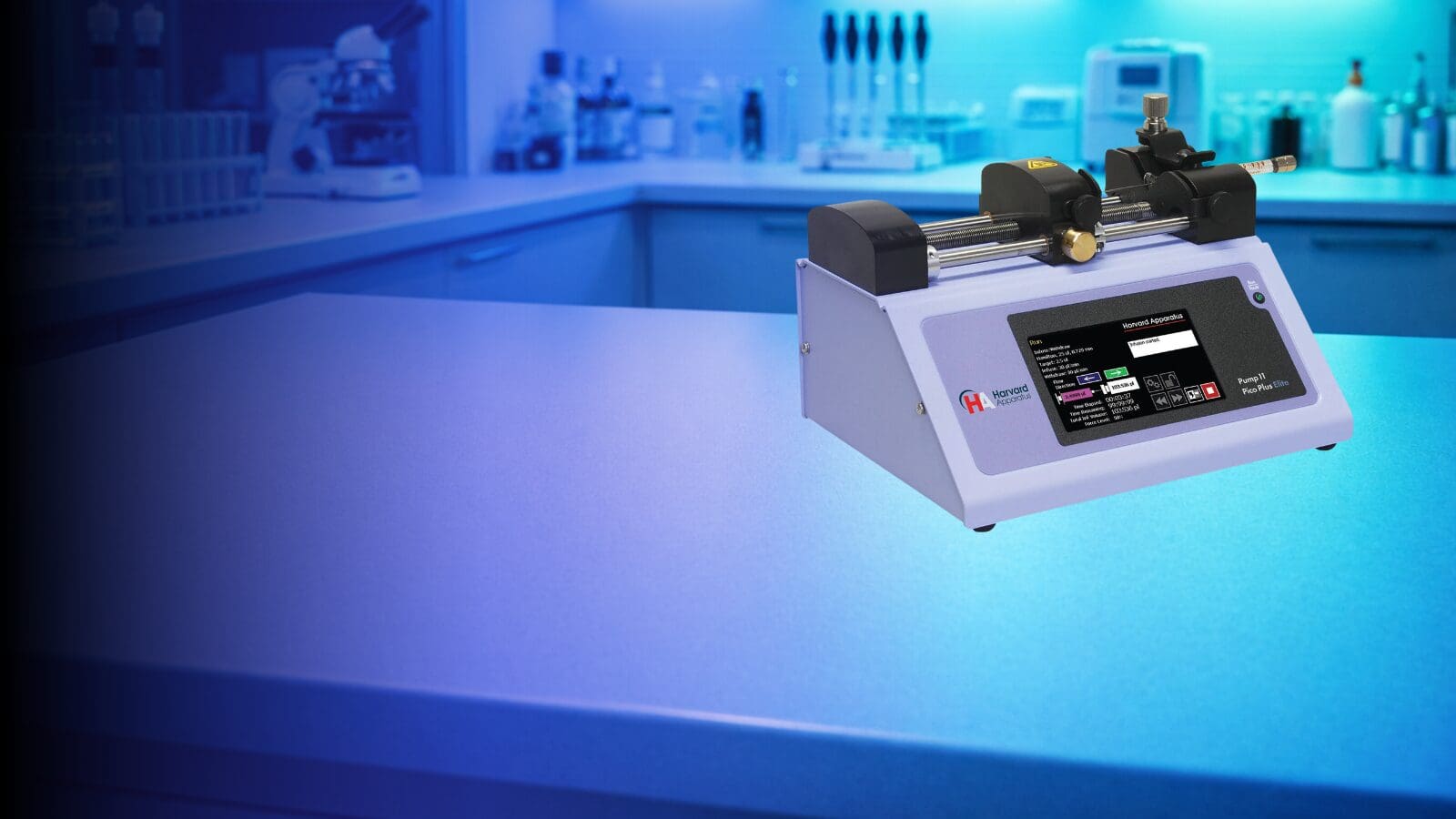
Harvard Apparatus has manufactured precision laboratory equipment since 1901. The 11 Pico Plus Elite represents their flagship microfluidic syringe pump, designed specifically for applications requiring picoliter-level precision.
This programmable infusion/withdrawal pump delivers flow rates from 0.54 pL/min to 39.77 mL/min in single-syringe configuration. The dual-syringe version handles 0.5 μL to 10 mL syringes with flow rates up to 11.70 mL/min. Both configurations maintain ±0.35% accuracy and ±0.05% reproducibility across the entire flow range.
The target audience includes microfluidics researchers, pharmaceutical development teams, and any laboratory requiring ultra-precise fluid delivery. Drug delivery studies, organ-on-chip research, and nanoparticle synthesis all benefit from this level of precision.
Key capabilities include advanced programming profiles for constant rate, ramp, gradient, and autofill operations. Users can create and store up to two custom methods with 50 steps each directly on the pump. The RS-485 interface allows daisy-chaining up to 99 pumps for complex multi-channel experiments.
The pump can be operated vertically to reduce bench footprint by 55%, a practical consideration for crowded laboratory spaces. Advanced microstepping eliminates flow pulsation, critical for sensitive microfluidic applications.
Description of the dLSP 500 Digital Syringe Pump:
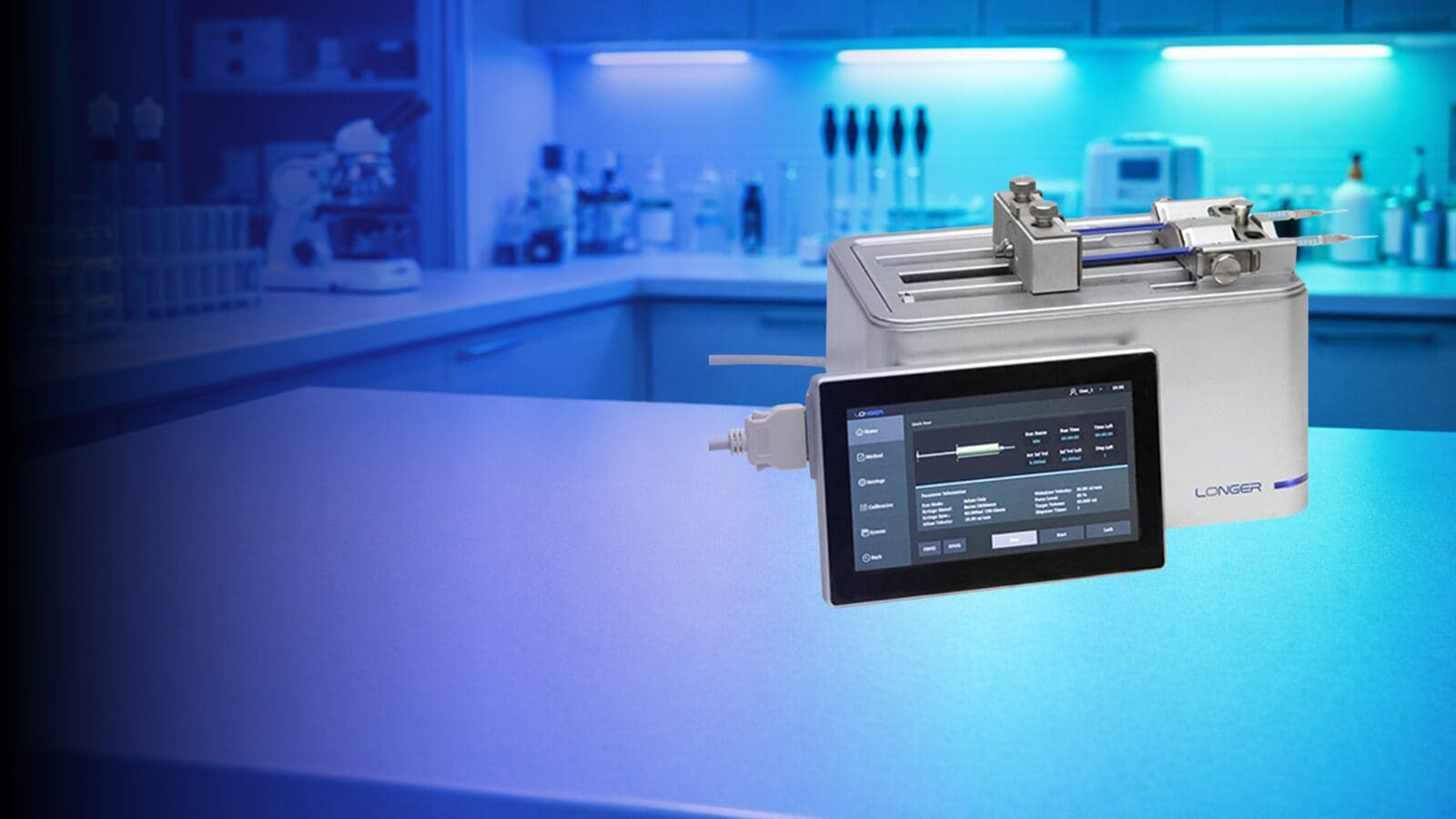
The dLSP 500 series comes from a manufacturer focused on bringing modern digital connectivity to precision fluid handling. The product line includes four models: dLSP 510 and 520 (standard), plus dLSP 510 Pro and 520 Pro versions.
Standard models deliver ±0.5% linear travel accuracy, while Pro versions match the Harvard unit at ±0.35%. The Pro versions also achieve lower minimum flow rates of 0.3 pL/min compared to 0.7 pL/min on standard models. Maximum flow rates reach 120 mL/min with a 60 mL syringe on single-channel units.
The dLSP 500 targets laboratories that need flexible control options and regulatory compliance. The Pro version meets 21CFR Part 11 requirements, making it suitable for pharmaceutical development and GLP/GMP environments where electronic records and audit trails matter.
Connectivity options set this pump apart. Beyond standard USB and RS-485, the dLSP 500 includes Ethernet, Wi-Fi, and Bluetooth. Users can monitor and control the pump through a dedicated PC software package or Android app, enabling remote operation and integration with laboratory information management systems.
The 7-inch IPS HD display provides a larger interface than competing units. Multi-step programming is available on Pro versions, with blocks for constant flow, ramp, loop, delay, repeat, and various trigger functions.
Feature-by-Feature Comparison
1- Flow Rate Range and Precision
The Harvard Apparatus achieves a minimum flow rate of 0.54 pL/min across all configurations with consistent ±0.35% accuracy. The dLSP 500 Pro actually goes lower at 0.3 pL/min, but standard models only reach 0.7 pL/min with reduced ±0.5% accuracy.
For maximum flow rates, the dLSP 500 dominates. Its single-channel configuration pushes 120 mL/min versus 39.77 mL/min from the Harvard unit. This matters for applications requiring rapid syringe refilling or higher-volume dispensing.
Winner: Tie. Harvard wins on consistent precision across all models. dLSP 500 Pro wins on minimum flow rate. dLSP 500 wins on maximum throughput.
2- User Interface and Display
The dLSP 500 features a 7-inch IPS HD LCD display at 1024×600 resolution. The Harvard unit uses a smaller 4.3-inch WQVGA TFT touchscreen. Both offer intuitive icon-based interfaces for programming and monitoring.
The Harvard interface allows complete method creation without a PC. Users can build 50-step programs directly on the touchscreen. The dLSP 500 requires PC software for multi-step programming on Pro versions, though basic operation works through the touchscreen.
Winner: dLSP 500 for display size and clarity. Harvard wins for standalone programming capability.
3- Connectivity Options
Harvard Apparatus provides USB Type B, RS-485 for daisy-chaining, TTL I/O through a 15-pin D-sub connector, and footswitch input. Up to 99 pumps can be networked through RS-485.
The dLSP 500 includes all wired options plus Ethernet, Wi-Fi, and Bluetooth. The Android app enables smartphone control. This wireless capability allows remote monitoring and integration with modern lab automation systems.
Winner: dLSP 500 by a significant margin for connectivity flexibility.
4- Build Quality and Footprint
The Harvard unit weighs 2.1 kg with dimensions of 22.6 x 17.78 x 15 cm. It can operate vertically to reduce bench footprint by 55%. The tilting display accommodates vertical orientation.
The dLSP 500 drive unit measures 260 x 185 x 180 mm and weighs 3.49 kg, plus a separate 0.37 kg controller. The two-piece design offers flexibility but requires more total bench space.
Winner: Harvard Apparatus for compact design and vertical operation capability.
5- Regulatory Compliance
The Harvard Apparatus carries CE, ETL (UL, CSA), WEEE, EU RoHS, and CB Scheme certifications. These cover safety and environmental requirements but not pharmaceutical documentation standards.
The dLSP 500 Pro meets 21CFR Part 11 requirements for electronic records and signatures. This matters for pharmaceutical development, clinical research, and any GLP/GMP environment requiring audit trails.
Winner: dLSP 500 Pro for pharmaceutical and regulated environments.
6- Linear Force
The Harvard Apparatus delivers 35 lbs (16 kg) of linear force at 100% selection. The dLSP 500 provides 40 lbs (18 kg) under the same conditions. Higher force helps when pushing viscous fluids or overcoming back pressure in microfluidic systems.
Winner: dLSP 500 with 14% more pushing force.
Pricing: Harvard Apparatus 11 Pico Plus Elite Syringe Pump vs dLSP 500 Digital Syringe Pump
The Harvard Apparatus 11 Pico Plus Elite ranges from $4,299.75 to $4,429.62, with pricing varying between single and dual-channel configurations. This represents consistent pricing with minimal variation between options.
The dLSP 500 series spans $3,409.73 to $5,014.27. The standard dLSP 510 and 520 models sit at the lower end, while Pro versions with enhanced accuracy and 21CFR Part 11 compliance command premium pricing.
For budget-conscious academic labs, the standard dLSP 510 offers the lowest entry point. If ±0.5% accuracy meets your needs and you do not require pharmaceutical compliance, this represents solid value.
Mid-range buyers face an interesting choice. The Harvard Apparatus dual-channel model costs roughly the same as a dLSP 520 Pro but offers different advantages. Harvard provides the 2-year warranty and established brand reputation. The dLSP 520 Pro delivers regulatory compliance and wireless connectivity.
For pharmaceutical or GMP environments, the dLSP 520 Pro justifies its higher price through 21CFR Part 11 compliance. Building equivalent documentation systems around the Harvard unit would require additional software and validation effort.
Total cost of ownership should factor in accessories. The Harvard unit includes pump and power supply. The dLSP 500 includes pump, touchscreen controller, connecting cable, and power supply. Both require syringes purchased separately.
The Verdict: Harvard Apparatus 11 Pico Plus Elite Syringe Pump or dLSP 500 Digital Syringe Pump?
✅ Choose the Harvard Apparatus 11 Pico Plus Elite if you:
- Need consistent ±0.35% accuracy without paying for a "Pro" upgrade
- Plan to network multiple pumps (up to 99 units via RS-485)
- Value the 2-year warranty and Harvard Apparatus brand reliability
- Work in space-constrained environments where vertical operation helps
- Require standalone programming without PC dependency
- Prioritize proven technology from a 120-year-old manufacturer
✅ Choose the dLSP 500 Digital Syringe Pump if you:
- Need wireless control via Wi-Fi, Bluetooth, or Android app
- Work in pharmaceutical or GLP/GMP environments requiring 21CFR Part 11 compliance
- Want the lowest possible entry price (standard dLSP 510)
- Need maximum flow rates above 40 mL/min
- Prefer a larger 7-inch display interface
- Require Ethernet connectivity for lab automation integration
The Harvard Apparatus represents the established choice for precision microfluidics. The dLSP 500 represents the modern choice for connected, regulated laboratories. Neither pump is universally superior. Your specific application requirements should drive the decision.

Frequently Asked Questions
Which pump offers better accuracy for microfluidic applications?
Both achieve ±0.35% accuracy and ±0.05% reproducibility when comparing the Harvard Apparatus to the dLSP 500 Pro. Standard dLSP 500 models offer ±0.5% accuracy. For ultra-precise microfluidic work, either the Harvard unit or dLSP Pro version will perform equivalently.
Can I control these pumps remotely?
The dLSP 500 offers Wi-Fi, Bluetooth, and Ethernet connectivity plus an Android app for remote control. The Harvard Apparatus requires wired USB or RS-485 connections for external control, with no wireless options available.
Which pump supports larger syringe volumes?
The Harvard Apparatus single-channel version accepts syringes up to 50/60 mL. The dLSP 510 and 510 Pro handle syringes up to 60 mL. Dual-channel versions on both platforms max out at 10 mL (Harvard) or 30 mL (dLSP 520).
Do either of these pumps meet pharmaceutical regulatory requirements?
The dLSP 500 Pro versions meet 21CFR Part 11 requirements for electronic records and signatures. The Harvard Apparatus carries standard safety certifications (CE, ETL, RoHS) but does not include pharmaceutical documentation compliance features.
What maintenance do these pumps require?
Both pumps use precision lead screws and stepper motors requiring minimal maintenance. Keep the syringe clamp mechanisms clean and verify calibration periodically. Neither manufacturer specifies routine maintenance intervals, suggesting these are low-maintenance instruments under normal laboratory conditions.
Can I use glass and plastic syringes with both pumps?
Yes. Both the Harvard Apparatus and dLSP 500 accept standard glass and plastic syringes. Syringe compatibility ranges from 0.5 μL to 60 mL depending on the specific model and configuration.